Thursday, 19 March 2015
loves lament
My uncle (Hikairo Herangi)has just passed away. Not that long after the death of his wife(Rawe). A similar scenario to my younger sibblngs' inlaws.

Thursday, 19 February 2015
Hikairo

Thursday, 12 June 2014

 | |
| Reign | 23 May 1966 – 15 August 2006 |
|---|---|
| Coronation | 23 May 1966 |
| Full name | Te Arikinui Dame Te Atairangikaahu |
| Born | 23 July 1931 |
| Birthplace | Waahi Marae, Huntly, New Zealand |
| Died | 15 August 2006 (aged 75) |
| Place of death | Turangawaewae Marae, Ngaruawahia, New Zealand |
| Buried | Mount Taupiri, New Zealand, 21 August 2006 |
| Predecessor | Korokī Te Rata Mahuta Tāwhiao Te Wherowhero |
| Successor | Tuheitia Paki |
| Consort | Whatumoana Paki |
| Issue | 7 children: Heeni Katipa (née Paki); Tomairangi Paki; Tuheitia Paki; Kiki Solomon (née Paki); Mihi Gabrielle Paki; Maharaia Paki; and Te Manawanui Clarkson (née Paki) |
| Royal House | Te Wherowhero |
| Father | Korokī Te Rata Mahuta Tāwhiao Te Wherowhero |
| Mother | Te Atairangikaahu Herangi |
Thursday, 5 June 2014
my fifttieth birthday.

Thursday, 1 May 2014
Kahui arriki.
Kotiro Paki was the third child of five to hori Kupai Paki and Te Marae Mahuta. Her brothers and sisters included Tonga now deceased the oldest, Wairangi now living in Austrralia, Bimbo also living in Australia,Te Okewhare my mum she was whangai'd out (fostered out) by the out by Kahui Ariki- maori royal family. There were four in tourwhangai'ed children. 3 girls and 1 boy. All the whangied (adopted children)


 Maea Walker, Mahinarangi ...;Te Okewhare Murru
Here is her whangied(adopted) brother Mr Robert
tekotahi Mahuta.Uncle bubs as he
known by us children and
his close friends.
tekotahi Mahuta.Uncle bubs as he
known by us children and
his close friends.
Thursday, 20 March 2014
The continual cellebratiions of Turangawaewae's river culture.

The Turangawaewae regatta had its beginnings in March 1896 when the community of Ngaruawahia held an official carnival of the banks of the Waikato and Waipa rivers. Earliest regattas were held at the Point, at the confluence of the two rivers. The Turangawaewae Marae community staged the regatta permanently from 1973, following flooding at the Point.
The purpose of the regatta was to encourage aquatic sports and Maori customary river activities, with particular emphasis on the preservation of ancient customs and traditions.
Ko Ngaruawaahia taku turangawaewae - Ngaruawaahia shall be my footstool. Words uttered by Taawhiao, and ones which have echoed through time symbolising that Ngaruawaahia would always be a place for Waikato Tainui people to find strength, security and a sense of belonging. Ngaruawaahia, where for over 100 years, two rivers and a yearly regatta have linked Maori and Pakeha together. It is a time when the older generation will re-live and remember the past, where the rangatahi learn about the past in an atmosphere of fun and where all will celebrate the river and its culture.
Thursday, 27 February 2014
The last of the last
The last of the last.

Hikairo herangi. A quiet and unassuming man
who passed away quietly during the week.
A very knowledgeable kaumatua. (He taonga) a valuable resource lost to Maoritaanga. Related to my mum who gave him the nickname NigelThursday, 23 January 2014
I like ice hockey now tops before it was varsity tops

I'm lusting after a Ice hockey tops now. Before it was varsity tops now its ice hockey top. Why? Because they are so huge and colourful.
Thursday, 16 January 2014
COPIED OFF THE TURANGAWAEWAE SITE.
Tungia te ururua kia tupu
whakaritorito te tupu o te harakeke
whakaritorito te tupu o te harakeke
The histories of native peoples are often silenced, relegated to ‘pre-history’: before history really began and foreign lands were ‘discovered’ by a Columbus or a Cook. Enough of the singular and narrow story of history. My question here is simply this: What are the little-known histories that disturb and disrupt the dominant idea that “if it wasn’t for us, you’d still be running around in grass skirts?“
10. There was no Great Migration
There wasn’t? I hear you cry, mystified. No indeed, and why – because our navigators and sailors ROCKED THE BOAT!! I kid you not. It has been a source of frustration to New Zealand academics throughout the 19th and 20th century to try and figure out the mystery of Māori migration. For years it has been written in school history books that a fleet of waka arrived together to these shores in around 1300. The Great Migration. Its a convenient tale for a number of reasons.First it implies that this all-at-once settlement of New Zealand came about by chance. Apparently some people don’t find it hard to believe that an entire extended whanau; mum, dad, uncles, aunties, cousins, elders and so on would just jump in a boat and push off for … wherever?! A “lets just see where the wind blows us” kinda deal. Who does that?
 So by this thinking it was really a matter of luck that these early Māori stumbled across the land under the long white cloud – Aotearoa. Back in the day, newly pulled up to port in big flash ships like the Endeavour, deep-sea voyaging by Māori must have seemed an impossible feat to early (un)settlers looking aghast at waka that seemed to be held together by little more than plant material.
Secondly, to acknowledge separate arrival times over several centuries was to think the unthinkable. That Māori had made deliberate back and forth voyages across vast areas of the Pacific displaying navigational skills far beyond those of their European counterparts who at that time were still clinging to the shores of their own lands. It no doubt helped that Māori don’t appear to have bought into the notion as the European world had, that the earth was flat. Not if their expeditions across Te Moana nui a Kiwa (Pacific Ocean) with very little apparent fear falling off the edge, are anything to go by.
9. Māori only sometimes were warriors
Contrary to novels and movies and the latest genetic ’science’, Māori once were warriors only at certain times of the year. You can think of it like ‘war season’. E hika, with kumera to plant, titi to gather, and fish to catch how on earth could peoples be off making constant war and still survive? Its a crazy idea but for some strange reason one that has spread like proverbial wild fire. Unlike countries now who employ a professional class of warrior (called armies) that can be sent off to do battle forWhich doesn’t mean that when needed Māori didn’t kick kumu on the battlefield. As (un)settlers found in long battles where even with strength of numbers on their side, their foe were difficult to defeat. A historian mate assures me that in the history of colonial warring in Aotearoa it is the disposability of a large number of crown soldiers rather than any military prowess that bought battles to an end.
8. In fact, Māori led the world in peaceful protest

Te Whiti o Rongomai, Mohandas Gandhi, Martin L King Jr. Note any similarities?
The story of Parihaka is recounted in full here, As a quick brush up, in the late 1800s massive land confiscation at odds with the tricky treaty’s guarantee to Māori of ‘full exclusive and undisturbed possession of their Lands and Estates Forests Fisheries’ and so on and so on, was getting on tangata whenua’s last nerve (to put it mildly). At Parihaka Te Whiti o Rongomai and Tohu Kākahi led a peaceful movement to disrupt the land-grab going on all around them. Frustrating the process by pulling up surveyors’ pegs and ploughing on confiscated land; any form of violence was strictly forbidden (strange for savages). How was the peaceful movement countered? With the 1800s version of the Terrorism Suppression Act, allowing peoples to be arrested en mass, and held without trial. Hundreds of men and boys were shipped down south and forced to work – contributing to the infrastructure of cities like Dunedin. Te Whiti and Tohu were arrested and detained in the South Island also. In order to put this uppity duo in their place they were shown the wonders of European technology. To which Te Whiti responded:
No wonder he was considered a madman by many.“The Pākehā have some useful technology but not the kindness of heart to see that Māori also possessed much great technology which if adopted would lead to stability, peace and a great new society.“
7. Māori once were geographers

Te Ika a Maui, shaped like a stingray
But wait, that’s not all. Much is made of the nuisance of taniwha when it comes to roading or building developments. According to ‘common sense’ this is just Māori holding up progress or trying to make a quick buck. But NO, not according to Auckland University’s Dr Kepa Morgan, a senior lecturer in civil and environmental engineering. It seems that taniwha may well serve as important symbol or warning sign, of land not suitable for flash new highways or highrise developments. Ngati Naho protested the construction of State Highway 1 near Meremere several years back citing a problem for their taniwha Kura Tahi. Their concerns were heeded and 14 months after the highway was finished the Waikato River flooded. If the highway had been built on its original site it would have cost thousands to repair; thanks to Kura Tahi the road, and the taniwha, were safe.
Not so at Ngawha where several years later concern was expressed that the taniwha Takauere would be irked by the building of Ngawha Prison. This time the powers that be weren’t so open minded and carried on regardless.
 Since completion there have been numerous problems with the stability of the prison’s foundations – basically its sinking into the ground. An issue that had already cost the Government $100 million more than originally budgeted to build the prison in the first place.
6. Māori once were astronomers
Several years ago a talkback announcer, displaying the usual depth of knowledge talkback announcers have (think: puddle in January), was bemoaning Māori objections to genetic modification and exclaimed: “This is science. What the hell would they know about science”. Hmmmm. Science to this dude obviously comes in a white coat (not to mention white skin). To the contrary, early Māori displayed scientific genius; not least of which was evident in their intimate knowledge of the stars. As Elsdon Best somewhat begrudgingly put it:“It is assuredly a fact that in former times the average Maori knew much more about the stars than does the average man among us.”And here we’re not talking just descriptive knowledge: a series of names and understanding of their location and appearance at certain times of the year – though undoubtedly this too. It is the system of scientific use made of that knowledge that was astounding – from navigation and gardening to the marking of time. It was obvious to even the most ‘scientific’ of the time that Māori had spent considerable time studying the heavenly bodies. This was the knowledge of the tohunga kokorangi, the Māori astronomers. None of these bodies is perhaps as well known as Matariki (Twinking Eyes), known by the Europeans as Pleiades and the Japanese as Subaru (every time you see the Subaru logo on the back of a car, you’re looking at Matariki) which heralds the beginning of the Māori New Year. But that knowledge was not limited to just stars. Māori had names for comets, meteors, and clouds too. From those consisting of several strata (layers) -matahauariki, to fragments of cloud or purei ao; as well as a working knowledge of what these various forms meant in terms of weather patterns. Meteorologists then too – chur. It was English Anthropologist Sir Edward Burnett Tylor who in the late 1880s said:
“It always happens in the study of the lower races that the more means we have of understanding their thoughts the more sense and reason do we find in them.”You don’t say.

Exploding the Myths II to come… ma te wa!
Thursday, 14 November 2013
The ngau tuara phenomenon.
The ngau tuara phenomenon.
Ngau tuara-translated literally means back stabber. In my circle of friends though varied they maybe. You need to be prepared for my family/friends rants and raves always comical you need a sense of humour especially if
you role with me. At times it may get serious the trick is learning to differentiate between the tone and text of the conversation. My dad is the head honcho. For someone who has been confined to a wheelchair. In fact my whole family we're all ngau tuara's(back stabbers).

Ngau tuara-translated literally means back stabber. In my circle of friends though varied they maybe. You need to be prepared for my family/friends rants and raves always comical you need a sense of humour especially if
you role with me. At times it may get serious the trick is learning to differentiate between the tone and text of the conversation. My dad is the head honcho. For someone who has been confined to a wheelchair. In fact my whole family we're all ngau tuara's(back stabbers).
Thursday, 31 October 2013
Thursday, 10 October 2013
polyfest wesly college contribution.
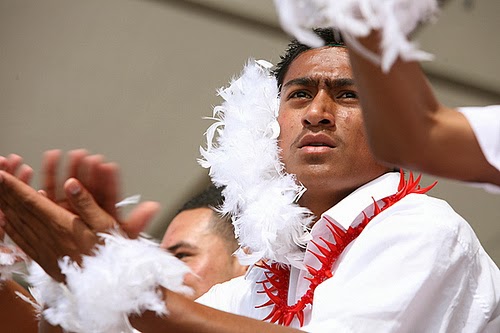

The Polyfest now is massive with the practises of each specific cultural item back then it was known as the intersecs. Back in the seventies late seventies to be exact there were the intersecs held at St.Stephens back in the days when it was an all boyz school. Our head boy was Temuera Morrison. He was a cool leader he and his cousin Hiwaroa were members of our Polynesian groupThursday, 12 September 2013


Thursday, 25 July 2013


Thursday, 18 July 2013


The historic waka (canoe) Te Winika, seen here on the Waikato River in 1971, was restored by a team of carvers led by Piri Poutapu in the 1930s. Poutapu, who had a carving school at Tūrangawaewae marae, researched Waikato carving styles and carved the bow, figurehead, sternpost and sides. In 1973 the Māori queen, Dame Te Ātairangikaahu, gifted Te Winika to Waikato Museum.
Thursday, 11 July 2013

His father, Sid Adams, was an Englishman who settled in New Zealand after serving in the Royal Navy. Steven was the youngest of Sid's 18 children with five different women; his mother is Tongan. Steven's siblings and half-siblings are notable for their unusual size and athletic prowess. Adam's brothers average 6'9" (2.06 m), and his sisters average 6' (1.83 m).[2]
.
Thursday, 4 July 2013
nga waka taua o Tainui

waka up and down the the waikato river. For our ariki then and now. now our king and geusts. The names of the t
Thursday, 20 June 2013

If you're a visitor to the never nevers of Ngaruawahia there are only four places.... No! change that to two places - to frequent for an evenings entertainment.
The Delta tavern and the Waipa tavern. These two taverns are synonymous with the two local rugby league clubs in Ngaruawahia.

The Waipa Tavern
In todays vernacular what has become known as the battle of the bridge.
Thursday, 6 June 2013
my desires feed me more.

My daily diary has become like a drug to (a natural high though.)Like a drug feeds the bodys' need
for fulfilment.
Thursday, 30 May 2013
nga whanaunga.
When I was young I would spend heaps of my holiday time at all my
anau's situated in many areas throughout Te ika-a-Maui (north Island).
From Maungaturoto in the North. Wairoa and, Ruatoria on the east coast.
Was this a fiendish plan of my parents. All'n'all it seems to have worked
out all for the good. I still have strong whanau bonds with all my whanau
now!
To be more descriptive I have very strong bonds with all my whanau.
anau's situated in many areas throughout Te ika-a-Maui (north Island).
From Maungaturoto in the North. Wairoa and, Ruatoria on the east coast.
Was this a fiendish plan of my parents. All'n'all it seems to have worked
out all for the good. I still have strong whanau bonds with all my whanau
now!
To be more descriptive I have very strong bonds with all my whanau.
Subscribe to:
Posts (Atom)
I missed Hone but Angeline was great too. A line-up of passionate, articulate peeps. Can’t be politics…
In part 2 will you include the myth about Maori cannibals colonising the real indigenous people? Any time I say anything about Maori somebody brings it up! Even if I say “Maori are over-represented in prison” or “Maori culture isn’t totally bad” some white person ALWAYS accuses me of killing and eating the Mori-ori –or the original settlers Celts or Vikings. My mother even believes that and she’s Maori! Where do they come up with this nonsense? :/
The conundrum Maori and other Indigenous peoples find ourselves in is that if we change, adapt, adopt or in any way take on the cloak of modernity, we’re considered no longer to represent our cultures, no longer ‘traditional’, whereas the often frantic modernising of European’s and their descendants is nothing more than normal.
I’m not so sure about the association of the fish-like shape of Te Ika a Maui being an outcome of our geographical skills (I’m a Maori geographer myself…). Surely as an ocean-going fishing culture, ANY land ‘coming out of’ Te Moana Nui a Kiwa would have been metaphorically interpreted as a fish.
So you think that a people that explored the hell out the Pacific Ocean would not also seek to explore the extent of the new lands they arrived at? I think that’s basic survival 101 shit, know the layout of your habitat. Get a bearing on the situation.
And I know it’s possible. For instance if you were to walk or sail the coast from Kapiti to Taranaki and noted your position in relation to those 3 formations that are occasionally discernible on the horizon (Taranaki, Ruapehu and Tarawera), you’d be able to get a rough idea where you are in relation to where you started. Not saying that that’s how they did it, but that’s how I might approach it.